To the casual observer, bingo looks like an exercise in pure serendipity. A hall buzzing with chatter, brightly colored daubers in hand, and numbered ping-pong balls floating in a wire cage suggest a pastime built entirely on chance. Yet beneath the clatter of balls and the suspense of waiting for a final call lies a fascinating matrix of statistical distributions, human psychology, and game theory.
While no player can influence which ball tumbles down the chute, treating bingo as thoughtless gambling overlooks the mechanics that drive it. Understanding how probability operates across different game styles, how pattern recognition shapes our expectations, and where actual player agency exists transforms how we view the game. It stops being a passive waiting room and becomes a case study in practical probability.
The Architecture of the Cage and the Card
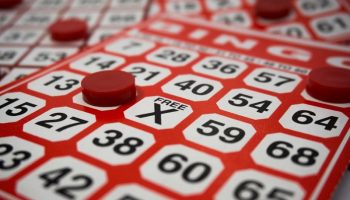
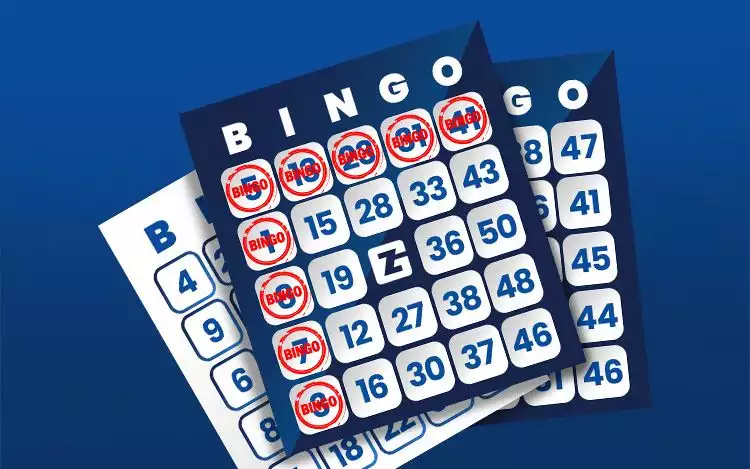
Every bingo session operates under strict combinatorial constraints. In the standard American format, the game revolves around 75 numbers distributed across a five-by-five grid. The card spells out the word B-I-N-G-O, with each letter governing a specific cluster of 15 numbers: B holds 1 through 15, I covers 16 through 30, N contains 31 through 45, G spans 46 through 60, and O claims 61 through 75. Because the center square is typically a designated free space, a standard card features exactly 24 active numbers.
On the very first call of a 75-ball game, the probability of any specific number being drawn is identical: exactly 1 in 75, or roughly 1.33 percent. Because numbers are drawn without replacement, that denominator shrinks with each passing call. By the thirtieth draw, an uncalled number carries a 1 in 45 chance of emerging next.
The complexity escalates when measuring how these individual probabilities interact with card geometry. Completing a simple five-number line—whether horizontal, vertical, or diagonal—demands far fewer draws on average than completing a complex shape. A standard straight-line bingo usually materializes within 15 to 20 calls in a room filled with active cards. Conversely, a coverall or blackout game, which requires all 24 spaces to be filled, often stretches past 50 to 60 calls before anyone claims a win. The mathematics of pattern density fundamentally alters the duration, tension, and volatility of every round.
The Mirage of Pattern Recognition
Human beings are wired to detect structure, even when surrounded by pure noise. In a game governed by random physical draws or certified random number generators, our cognitive biases often run ahead of the math.
The most common trap is the gambler’s fallacy—the belief that past events alter the likelihood of future independent occurrences. If the number 42 has not appeared across three consecutive sessions, players routinely convince themselves that it is overdue. Statistically, the physical ball marked 42 possesses no memory of previous games. When 75 balls bounce inside a blower, each draw begins with an indifferent slate.
A related phenomenon is the clustering illusion, where streaks of odd numbers or high numbers lead players to suspect the cage is uneven or the dealer possesses a rhythmic touch. In genuine random distribution, clumps and streaks are not anomalies; they are expected. True randomness looks messy, jagged, and counterintuitive. When players hunt for meaningful patterns in previous calls, they are projecting narrative onto cold mechanics.
Strategic Theories: Granville and Tippett
Over the decades, mathematicians and statisticians have attempted to formalize frameworks that maximize a player’s statistical posture. While these systems cannot alter the randomness of the draw, they aim to optimize card selection relative to probability curves.
Joseph Granville and Uniform Distribution
Joseph Granville, an American financial market analyst known for his work in technical stock analysis, turned his attention to bingo probability in the late twentieth century. Granville argued that because the draw pool is uniform, the winning numbers across a sufficiently long session will exhibit natural balance.
Granville suggested that players should select cards that maximize diversity across three distinct axes:
-
An equal split between odd and even numbers.
-
A balance between high numbers (38 to 75) and low numbers (1 to 37).
-
A wide spread of terminal digits, ensuring the card contains values ending in 0 through 9 rather than clustering around shared endings.
His thesis rested on the law of large numbers. If the pool inevitably trends toward an even distribution of odd, even, high, and low values, a card that mirrors that distribution is theoretically positioned to catch calls steadily throughout the game rather than waiting on specific runs.
L.H.C. Tippett and the Law of Averages
British statistician L.H.C. Tippett took an entirely different approach, focusing on the duration of specific game formats. Tippett’s theory leans into central limit theorem concepts.
In a 75-ball game, the median value is 38. Tippett proposed that in very short games—such as those requiring a simple four-corners pattern or a rapid single-line win—the called numbers will naturally scatter closer to the extremes of the spectrum, favoring numbers near 1 and 75. However, in extended games like blackouts, the greater sample size of called balls causes the median of the drawn numbers to gravitate toward the center value of 38.
Under Tippett’s framework, card selection depends on the target pattern: pick cards weighted toward the outer edges for lightning rounds, and gravitate toward cards clustered around the mid-thirties for marathon sessions.
The Real Decisions That Influence the Board
While analytical frameworks like Granville’s and Tippett’s offer compelling academic logic, strict card-picking is rarely permissible in modern commercial halls or digital rooms, where cards are issued at random. However, players still face legitimate tactical choices that directly influence their expected return.
Competition and Field Density
Unlike traditional casino table games where payouts are fixed regardless of how many people sit beside you, traditional bingo operates with a variable competitive landscape. If a room offers a fixed prize pool of five hundred dollars, your statistical edge is directly tied to the total number of cards in play.
Playing in a packed hall on a Saturday evening against two hundred competitors holding five cards each dramatically lowers your probability of winning compared to a Tuesday morning session with twenty players. While the buy-in cost may remain identical, the mathematical expectation shifts substantially. Finding sessions with lower player density is the single most effective way to improve the odds of walking away with a prize.
The Multi-Card Balance
Holding multiple cards increases your slice of the total card pool, expanding your overall mathematical presence in the game. If there are 100 cards active in a room and you hold 10, you hold a 10 percent share of the eventual outcome.
Yet manual gameplay introduces a distinct limiting factor: human operational capacity. In physical halls, tracking ten cards simultaneously demands rapid scanning and precise hand movements. Missing a single call on an active card negates any statistical benefit gained from buying additional sheets. In computerized environments with auto-daub features, this error rate drops to zero, shifting the challenge entirely from mechanical execution to disciplined bankroll management.
Card Dispersion Versus Consolidation
When buying multiple cards, players must also decide whether to seek shared numbers across their set or broad coverage. A consolidated set shares many identical numbers, meaning a single favorable call advances multiple cards at once. Conversely, an adverse draw stalls the entire collection.
A dispersed set spreads coverage as wide as possible across the 75-number spectrum. While this ensures steady action and keeps cards active deeper into a session, it also diffuses focus across multiple potential winning paths. Neither approach changes the house margin, but the decision dictates variance, determining whether your session is characterized by feast-and-famine swings or gradual attrition.
Embracing the Logic of the Draw
Bingo continues to thrive because its core rules remain universally accessible. Yet underneath the friendly exterior sits an intricate dynamic between combinatorial odds, behavioral intuition, and tactical decision-making.
Players cannot coax an elusive number from the machine, nor can they divine future draws from historical trends. The real game happens in the setup: assessing field size, managing volume without sacrificing accuracy, and understanding how different patterns alter the timeline of the draw. Approaching the game through this analytical lens replaces superstition with clarity, revealing the quiet elegance of the mathematics at work.