close

Otto Willie

Casino

How does the payout curve work in hi-lo across crypto casino game sessions?

Hi-lo payout curves at compatible operators shift based on the player’s prediction direction and the current card value, with predictions at the extreme ends of the card range producing lower multipliers because their probability is higher than predictions in the middle of the range, whose directional outcomes are more closely balanced. Players who predict higher from a two or lower from an ace access near-certain outcomes whose multipliers reflect that high probability through correspondingly modest return values at compatible operators. Understanding how the payout curve shifts across every card value and prediction direction at crypto casino games sites gives players complete pre-prediction return awareness before every selection at compatible operators.

Hi-lo payout curve mechanics

Hi-lo payout curves update dynamically with every new card reveal, because the current card value determines the probability distribution between higher and lower outcomes that the next prediction covers at compatible operators. Players who track current card values before placing each prediction confirm their understanding of how the displayed multipliers reflect the probability relationship between the two available prediction directions, with extreme card values producing unequal probability splits and central card values producing approximately balanced splits at compatible operators. Players who build multi-prediction hi-lo sessions at compatible operators observe the payout curve shifting across every card reveal, with each new card value producing its own distinct probability split and multiplier pair that the player evaluates before committing their next prediction.

How do card values shift prediction probability?

Card values shift prediction probability at compatible operators through their position within the deck’s rank range, with each card value determining how many of the remaining deck positions qualify as higher outcomes and how many qualify as lower outcomes for the player’s next prediction.

  • Low card values

Low card values, including two, three, and four at compatible operators, give significantly higher predictions and more qualifying outcomes than lower predictions from the same card, producing higher win probability for higher predictions and lower win probability for lower predictions. Higher win probability on the higher prediction direction from low card values produces lower multipliers that reflect the probability advantage, while the lower prediction direction carries higher multipliers reflecting its lower win probability at compatible operators.

  • Mid-range card values

Mid-range card values, including seven, eight, and nine, at compatible operators produce more closely balanced probability splits between higher and lower prediction outcomes, giving both prediction directions more similar win probabilities and therefore more similar multiplier values from the same card position. Players who encounter mid-range card values find that the payout curve displays more balanced multipliers between the two prediction directions than the pronounced asymmetry that extreme card values produce at compatible operators.

Payout curve and house edge

Hi-lo payout curves at compatible operators incorporate the house edge into every multiplier value across the full card range, with each prediction’s displayed multiplier sitting slightly below the mathematically neutral return that true probability calculation would produce without a house margin. Players who review published house edge figures for their preferred operator’s hi-lo implementation before their first funded session confirm the margin incorporated into every payout curve position across the card range at compatible operators.

Hi-lo payout curves shift across card values by reflecting the probability split between higher and lower prediction outcomes, with extreme card values producing pronounced asymmetric curves and mid-range values producing balanced curves, incorporating house edge into every displayed multiplier position at compatible operators.


read more
Online Betting

How Responsible Gaming Tools Are Improving Online Betting Experiences

For years, the phrase “responsible gaming” carried a distinctly clinical, almost punitive connotation. In the early days of online sportsbooks and digital casinos, player protection mechanisms were mostly treated as digital fire alarms—blunt, all-or-nothing tools designed to shut down an account after a crisis had already occurred. A player either operated with zero boundaries or pulled the emergency brake through complete self-exclusion.
Today, that outdated paradigm is dissolving. As modern digital wagering matures, the industry is experiencing a profound design shift: player protection features are no longer buried in account settings like warning labels on hazardous materials. Instead, they are being reimagined as sophisticated customization tools, sleek financial dashboards, and thoughtful user-experience enhancements.
Rather than dampening the excitement of a wager, modern responsible gaming tools are quietly transforming the entire ecosystem. By introducing clarity, reducing regret, and putting players in command of their own parameters, these systems are proving that the safest wagering environment is also the most engaging one.

Shifting from Blunt Restrictions to Granular Personalization

The core problem with legacy protection systems was their lack of nuance. Treating every user with identical, rigid restrictions created unnecessary friction for casual hobbyists while failing to provide intermediate support for those who simply wanted a healthier balance.
Modern platforms approach the challenge through the lens of personalization. Players now have access to granular account controls that function much like modern personal finance or fitness apps. Instead of facing arbitrary limits imposed from above, users can establish personalized parameters before their first bet is ever placed.
These features allow bettors to set distinct ceilings across multiple dimensions:
  • Deposit and loss limits calibrated to daily, weekly, or monthly intervals, preventing impulse funding during emotionally charged moments.
  • Session duration caps that automatically monitor time spent on the platform, helping players maintain perspective during extended game days.
  • Wager size ceilings that restrict single-bet stakes to a fixed percentage of an account balance, enforcing sound bankroll discipline.
When these boundaries are established during calm, reflective moments, they act as an automated hedge against emotional volatility. Players no longer need to rely solely on willpower in the middle of a high-stakes fourth quarter or during a frustrating cold streak. The system carries the cognitive load, allowing the experience to remain lighthearted and controlled.

The Strategic Power of Intentional Friction

In traditional product design, digital platforms obsess over eliminating friction. The prevailing theory in software development has long been that fewer clicks, instant deposits, and seamless navigation create superior user retention.
Yet in wagering environments, frictionless design can be actively detrimental. When deposits clear with a single tap and bets execute in fractions of a second, the natural pause required for rational assessment disappears. This is where modern responsible gaming tools introduce intentional friction—subtle, well-timed interruptions designed to break automatic behavioral loops.

Reality Checks and Micro-Pauses

One of the most effective implementations of intentional friction is the automated reality check. At predetermined intervals, platforms present an unobtrusive pop-up summarizing the active session: exact time logged in, total amount wagered, and net profit or loss over that duration.
To continue playing, the user must actively acknowledge the summary. This momentary delay interrupts the hypnotic state that can accompany rapid-fire betting. It forces a momentary shift from reactive, adrenaline-fueled decision-making back to conscious evaluation. For the vast majority of players, this brief reset is not an annoyance; it is a welcome clarity check that prevents unintentional overspending.

Cool-Off Intervals and Delayed Limit Increases

Another vital application of intentional friction governs how limit adjustments are handled. Under modern platform architecture, lowering a deposit limit or tightening a time cap takes effect immediately. However, requesting an increase in limits or removing an existing boundary triggers a mandatory cooling-off period, typically lasting twenty-four to seventy-two hours.
This intentional lag breaks the pattern of chasing losses. If a bettor hits their pre-set budget on an afternoon game, they cannot impulsively inflate their cap to chase back losses during the evening slate. By the time the cooling-off window expires, the emotional charge has cleared, allowing the player to evaluate the adjustment with a clear head.

Predictive Behavioral Telemetry Behind the Scenes

While visible player controls empower user agency, some of the most meaningful advancements are happening invisibly beneath the user interface. Advanced machine learning models now analyze real-time behavioral telemetry to identify early indicators of distress before the player even realizes they are off balance.
Historically, monitoring teams relied on rigid, backward-looking thresholds—such as whether an account crossed a specific raw dollar figure. This crude metric often misclassified affluent, disciplined high rollers while completely overlooking lower-income players experiencing severe distress on modest budgets.
Modern analytical engines monitor behavioral shifts rather than absolute monetary amounts:
  • Velocity changes, such as a sudden spike in deposit frequency within an unusually tight window.
  • Erratic stake escalation, where bet sizes multiply rapidly following consecutive losses.
  • Uncharacteristic session patterns, including prolonged play during early morning hours for accounts typically active on weekend afternoons.
  • Repeated cancellations of pending withdrawals, a classic hallmark of internal conflict and loss-chasing.
When behavioral algorithms detect these shifts, platforms can initiate proportional, personalized interventions. Instead of locking an account outright, the system might quietly disable promotional notifications, prompt the user with a gentle check-in prompt, or suggest a temporary time-out. By addressing vulnerability early and constructively, operators preserve player longevity rather than managing acute fallout.

Financial Transparency and the Removal of Ambiguity

A major source of post-session regret in online wagering is ambiguous accounting. When balances fluctuate through bonus credits, matched funds, pending payouts, and cash deposits, tracking true net outlay can be surprisingly difficult.
Contemporary platforms are adopting design cues from modern financial technology, presenting clear, interactive dashboards that illustrate a player’s complete financial trajectory. Players can review detailed visual charts showing total money deposited versus total funds withdrawn across specific months or calendar years.
This transparency strips away the cognitive distortions that frequently plague betting behavior. Bettors often remember their dramatic underdog victories vividly while mentally minimizing steady, incremental losses. When a clean, objective breakdown is easily accessible in the account hub, players retain a realistic understanding of their leisure spending. Wagering is repositioned as a transparent entertainment expense—akin to dining out or buying concert tickets—rather than an opaque, stress-inducing gamble.

Cultivating a Healthier, Long-Term Entertainment Culture

Perhaps the most significant benefit of modern responsible gaming architecture is cultural. When player protection mechanisms are intuitive, accessible, and destigmatized, they become a standard aspect of account setup rather than a red flag reserved for struggling individuals.
Much like smartphone screen-time trackers or automated fitness reminders, betting management tools are increasingly viewed as sensible digital hygiene. Setting a deposit limit or establishing a session timer is no longer seen as an admission of weakness; it is recognized as the mark of a methodical, disciplined player who values longevity over recklessness.
By replacing blunt bans with sophisticated tools of self-governance, modern platforms are building a far more sustainable entertainment medium. Players enjoy greater peace of mind, operators foster enduring relationships built on trust, and the thrill of the game remains precisely what it was always intended to be: engaging, controlled entertainment.
read more
Slot

The Hidden Cost of Free Drinks While Playing Slots

Few rituals feel more quintessentially Vegas than sliding a twenty-dollar bill into a glowing slot machine, tapping a few buttons, and having a cocktail server appear within minutes to ask what you are drinking. Ordering a complimentary bourbon on the rocks or a chilled gin and tonic feels like an immediate micro-victory over the casino. Before you have even landed a winning bonus round, the house is already buying you a drink.
In the carefully calibrated ecosystem of a modern gaming floor, however, true hospitality does not exist. Every complimentary perk, from valet parking to buffet vouchers, is engineered with mathematical precision. But while players often recognize that high-roller suites require thousands of dollars in action, the seemingly casual perk of complimentary alcohol on the slot floor slips past our critical defenses. That unassuming beverage handed to you in a plastic tumbler carries an invisible price tag, often turning out to be the most expensive cocktail you will ever consume.

The Volumetric Engine: Understanding Slot Machine Velocity

To understand why casinos are eager to hand out complimentary alcohol to slot players, one must first look at the mechanical rhythm of the machines themselves. Unlike table games, where physical shuffles, chip payouts, and fellow players create natural pauses, modern slot machines are built for pure, uninterrupted velocity.
A typical player on a standard video slot completes between 600 and 800 spins per hour. With multi-line wagering, bet denominations routinely climb from forty cents to three or five dollars per spin. Even at a modest wager of two dollars per spin, an active player generates roughly $1,200 to $1,600 in total coin-in over sixty minutes.
Slot machines also carry the highest mathematical house advantage on the casino floor. While games like blackjack or baccarat offer house edges between 0.5 and 1.5 percent with proper play, slot holds generally range between 6 and 12 percent, depending on the denomination and jurisdiction.
When you combine that high house advantage with relentless game velocity, the casino’s expected win per hour becomes staggering. Pouring eight ounces of rail liquor and tonic water costs the property less than a dollar, but maintaining an uninterrupted rhythm at that terminal generates dozens, if not hundreds, of dollars in theoretical profit for the house.

The Chemistry of Compromised Executive Function

The relationship between alcohol and risk-taking is well-documented, but inside a casino, its effects interact directly with sophisticated game design. Slot machines use sensory feedback loops—celebratory audio chimes, vibrant animations, and dynamic celebrations for wins that are actually smaller than the initial wager—to trigger continuous dopamine release.
Alcohol impairs the prefrontal cortex, the region of the brain tasked with impulse control, risk assessment, and long-term planning. When a player begins drinking while seated at a machine, several distinct behavioral shifts take place almost immediately:
  • Bet Escalation: Casual players who sat down intending to wager the minimum bet often find themselves toggling up to maximum credits, rationalizing that the increased payout potential is worth the variance.
  • Loss Normalization: Losses that might ordinarily prompt a player to hit the cash-out button and walk away are shrugged off as acceptable collateral damage.
  • Accelerated Spin Rates: The interval between spins contracts. Rather than pausing to absorb the result of a spin, an impaired player hits the spin button repeatedly, cutting short winning animations and inflating total hourly exposure.
Alcohol does not need to make a player intoxicated to work in the house’s favor. Even mild cognitive relaxation dulls the intuitive friction that makes us cautious with money, transforming a structured budget into disposable play money.

The Waiting Trap and the Sunk Cost of Loyalty

Beyond the chemical influence of the drink itself, the structural delivery of beverage service creates an ingenious operational trap: the anticipation window.
When you place an order with a floor server, they disappear into the back service bar to fetch your drink. Depending on how busy the floor is, that journey can take anywhere from fifteen to thirty-five minutes. During that window, the player is psychologically tethered to that specific chair.
Walking away means forfeiting the drink you ordered. More importantly, it feels like wasting the interaction, leaving a server wandering the aisles looking for an abandoned seat. As a result, players enter a holding pattern of continuous wagering. They stay seated, continuing to feed bills into the validator simply to kill time while keeping an eye out for the cocktail tray.
In many cases, a player who intended to play a twenty-dollar bill and leave ends up depositing another fifty or one hundred dollars just to ensure they are still occupying the machine when their drink finally arrives. That thirty-minute wait for a six-dollar pour easily translates into fifty dollars in additional machine hold.

The Reciprocity Dynamic

Once the drink lands on the small console beside your screen, human psychology introduces another layer of compliance: social reciprocity.
Handing over a few dollars as a tip creates a personal connection with the server. Players often feel an instinctive pressure to remain at the machine so they can order a second round when the server circles back, establishing an ongoing cycle of waiting, tipping, and uninterrupted wagering that extends a session well past its intended duration.

Calculating the True Financial Equation

Examining the actual ledger clarifies just how costly this dynamic can be. Imagine an afternoon session where a player settles in at a five-cent denomination machine, playing thirty lines at two credits per line—a very standard sixty-cent bet.
Operating at a moderate pace of 650 spins per hour, the player pushes $390 through the bill reader. If the machine is set to an average 9 percent hold, the theoretical loss is roughly $35 an hour. Over a two-hour session, the expected mathematical cost of playing is approximately $70.
If that player consumes two complimentary rum and cokes during those two hours, they have essentially paid $35 per drink in expected value, not including the tips handed to the server. Had that same individual walked into the property’s premium cocktail lounge, they could have enjoyed top-shelf spirits crafted by an expert mixologist in a quiet, plush setting for half that amount, all while retaining their entire gambling bankroll intact.

Smart Protocols for Navigating Floor Comps

Enjoying a drink while visiting a casino does not have to turn into an expensive mathematical mistake. Savvy visitors establish clear operational habits that decouple beverage consumption from active wagering:
  • Separate the Bar from the Board: Consider ordering your drink at a property lounge, paying cash, and enjoying it away from active wagering surfaces. Starting a gaming session with complete focus preserves capital.
  • Switch to Non-Alcoholic Options: Bottled water, club soda with lime, or espresso drinks are just as complimentary on most casino floors. They keep you hydrated and alert beneath the dry, conditioned air without dulling your risk awareness.
  • Establish Hard Stop Limits Before Ordering: If you do order a drink, cash out your remaining balance onto a ticket the moment your order is placed. If you wish to keep playing small while you wait, insert a single ten-dollar bill and let the reels spin down slowly without reaching back into your wallet.
  • Never Chase Free Value: Never prolong a session purely to wait for an order or justify a previous tip. Walking away from a two-dollar cocktail order is infinitely cheaper than losing twenty dollars waiting for it to arrive.
Casinos are masterworks of behavioral economics, and the complimentary beverage cart is one of the most effective tools in their arsenal. Recognizing that a drink is never truly free shifts the power dynamic back into your hands. When you understand the true exchange rate between the glass in your hand and the credits on the screen, you can make deliberate choices that protect both your bankroll and your enjoyment.
read more
Gambling

Inside Gambling Cybersecurity: Protecting Players in an Online World

When players log into an online gaming platform, their attention naturally centers on the immediate sensory experience: the clean interface, the rapid spin of a wheel, or the quick succession of card deals. Few stop to consider the invisible digital fortress operating beneath every click. Yet behind that polished exterior lies an environment handling millions of micro-transactions, instant identity checks, and real-time bank transfers every minute of the day.
In the broader landscape of e-commerce, few sectors present as alluring a target to cybercriminals as the online gambling industry. Unlike standard retail websites where compromised credentials yield little more than mailing addresses or recent order histories, an online gaming account acts essentially as a liquid wallet holding cash balances and direct links to financial institutions. Securing this ecosystem requires far more than generic antivirus software or standard firewalls; it demands an intricate, layered security architecture capable of outmaneuvering automated syndicates, financial fraud, and sophisticated intrusion attempts in real time.

The Unique Threat Landscape of the Digital Casino

To appreciate the defenses deployed in modern gaming environments, one must first recognize the sheer variety of threats targeting the ecosystem. The modern platform battles adversaries ranging from opportunistic actors exploiting leaked databases to organized criminal groups deploying automated botnets.
The most prevalent threat is credential stuffing, an automated attack where bots test millions of previously breached username and password combinations across hundreds of platforms. When a user recycles a password previously compromised on a retail or social media site, intruders can breach the gaming profile, draining deposited funds or siphoning accumulated loyalty rewards.
Beyond account theft, operators face relentless Distributed Denial of Service (DDoS) barrages. These attacks flood network servers with artificial traffic specifically during marquee events, such as the opening drive of a major championship game. A mere thirty minutes of downtime during peak wagering windows can inflict catastrophic financial and reputational damage. At the same time, platforms must constantly deflect syndicate bonus abuse, where coordinated networks deploy automated algorithms and spoofed identities to exploit promotional incentives at scale.

Data Architecture and the Principles of Zero Trust

Preventing unauthorized entry begins with modern network design. Leading operators have moved decisively away from traditional perimeter security models toward a strict Zero Trust architecture. In a Zero Trust environment, no user, device, or internal service is inherently trusted simply because it resides inside the network boundary. Every access request undergoes continuous verification and strict least-privilege scoping.
Data in transit is safeguarded using robust cryptographic protocols such as TLS 1.3, ensuring that communications between the player’s web browser and backend gaming servers remain immune to eavesdropping or man-in-the-middle interception. When it comes to sensitive user data—ranging from government-issued identity documents to banking routing numbers—operators employ tokenization and field-level encryption.
Through tokenization, real payment card details are replaced by non-sensitive mathematical placeholders known as tokens. Even if an unauthorized party manages to penetrate a peripheral database, the exposed tokens are functionally useless outside the closed payment gateway. Furthermore, compliant platforms maintain strict physical and logical separation between player balances and corporate operational capital, ensuring customer deposits remain isolated and secure regardless of wider system events.

Real-Time Behavioral Telemetry and Fraud Prevention

Static security rules are fundamentally insufficient against dynamic fraud. Today’s most sophisticated defensive measures operate silently in the background, analyzing thousands of behavioral telemetry points the moment a player interacts with the platform.
Machine learning models continually evaluate baseline player behaviors to spot subtle deviations:
  • Device Fingerprinting: Advanced telemetry analyzes screen resolution, hardware configurations, installed fonts, and operating system kernels to verify whether a login originates from a familiar device, immediately flagging unauthorized hardware changes.
  • Geolocation and Proxy Detection: High-precision location verification triangulates Wi-Fi signals, cellular tower data, and GPS coordinates. Sophisticated detection engines identify whether a user is attempting to mask their location using commercial VPNs, Tor networks, or residential proxy pools to bypass jurisdictional boundaries.
  • Velocity Checks and Betting Irregularities: Algorithmic monitors scrutinize transaction speeds. If an account suddenly attempts three consecutive maximum withdrawals minutes after an abrupt login from a new IP address, the system automatically freezes the transaction for human verification.
These systems flag suspicious actions without introducing friction for legitimate players. A genuine user navigating the lobby experiences zero latency, while an automated bot script attempting thousands of rapid-fire queries is neutralized before reaching the core servers.

Preserving the Integrity of the Game

Security in the online space extends far beyond financial accounts; it fundamentally encompasses the fairness and unpredictability of the games themselves. If players cannot trust that a digital card deal is authentic, the entire model falls apart.
Digital games rely on certified Random Number Generators (RNGs) to produce unpredictable outcomes. Modern RNG mechanisms leverage physical atmospheric noise, quantum thermal fluctuations, or complex cryptographic algorithms designed to resist reverse-engineering. To guarantee absolute impartiality, these engines are housed in hardened hardware security modules and subjected to rigorous statistical analysis by independent testing laboratories.
Critically, game logic runs strictly on server-side architecture. Client-side applications—whether running in a mobile app or an internet browser—merely render graphical representations of outcomes that have already been securely computed and recorded on the server. This makes it impossible for malicious users to manipulate game results by modifying local client memory or sending fabricated packet data.

The Player’s Crucial Role in the Security Chain

Even the most sophisticated enterprise security framework retains a vulnerable point: the human element. The vast majority of unauthorized account breaches do not originate from broken server cryptography, but from compromised user credentials.
Building a truly resilient security posture requires active player participation:
  • Enabling Two-Factor Authentication (2FA): Implementing an authenticator app adds an indispensable barrier. Even if a cybercriminal acquires a valid password through an unrelated database breach, they cannot bypass the time-sensitive secondary code.
  • Eliminating Password Duplication: Using unique, complex passphrases managed by a dedicated password manager neutralizes the threat of automated credential stuffing entirely.
  • Vigilance Against Social Engineering: Players should remain skeptical of urgent text messages or emails claiming their balance has been frozen or offering unrequested credits. Reputable operators never solicit passwords or sensitive financial credentials via unverified direct messages.
As the lines between online entertainment and advanced financial technology continue to blur, cybersecurity will remain the bedrock of the gaming experience. The ongoing battle between cyber syndicates and digital security teams is an arms race that never pauses. By combining architectural zero trust principles, proactive behavioral analysis, and conscious personal security habits, modern platforms ensure that the thrill of the game never comes at the expense of player safety.
read more
Poker

How Experienced Poker Players Adapt Strategies Against Different Opponents

Novice poker players spend most of their early hours looking downward. They scrutinize their hole cards, calculate whether a hand looks attractive, and try to remember whether suited connectors play better from late position or the blinds. When they lose, they blame a cold run of deck distribution; when they win, they credit their own courage.
Watch an experienced player at the felt, however, and you notice their attention is rarely fixed on their own chips. Their focus drifts across the table, studying posture, tracking bet pacing, and noting how their table mates react when the board textures turn dangerous.
The seasoned player understands an immutable truth of the game: poker is not played with cards; it is played with people using cards as a medium. While baseline mathematics and game theory provide the structural foundation, the real financial margin comes from recognizing an opponent’s specific strategic deviations and making the exact countermove to exploit them.

The Foundation: Balancing Theory Against Exploitation

In modern poker discussions, considerable weight is given to Game Theory Optimal play—a mathematically unexploitable strategy designed to break even against equally competent opponents over an infinite sample size. Yet, while professional players study equilibrium solutions away from the felt, they rarely execute rigid, robotic strategies in live games.
Treating poker like an unyielding mathematical puzzle leaves money on the table. If an opponent folds eighty percent of their hands to a single continuation bet on the flop, continuing to play a balanced, conservative range against them is a strategic blunder.
This is where exploitative play takes over. Veteran players treat theoretical balance as an anchor point—a safe harbor they return to against dangerous, unknown competitors. But the moment an opponent reveals a predictable tendency, the veteran immediately deviates from equilibrium to attack that specific weakness.

Dismantling the Calling Station

The loose-passive player, universally known in cardrooms as the calling station, is perhaps the most profitable archetype at lower and medium stakes. These players sit down to see flops. They hate folding, treat every check as an invitation to stay involved, and routinely convince themselves that third pair might somehow be the winning holding at showdown.
Amateurs often frustrate themselves against calling stations by trying to run elaborate, multi-street blushes. They tell a believable story of a monstrous hand across three streets, only to be snapped off by an opponent clutching a weak fourth pair with no kicker.
Experienced players adjust to the calling station through two deliberate decisions:
  • Complete elimination of bluffing. Against an opponent whose fundamental leak is an inability to fold, committing chips without a genuine hand is throwing equity into a furnace. Veterans accept that bluffing is simply removed from the playbook against this profile.
  • Aggressive, oversized value betting. When a skilled player catches top pair with a strong kicker against a station, they do not slow down or check to induce action. They bet large, and they bet relentlessly across the flop, turn, and river. Calling stations pay off big bets just as readily as small ones, making it essential to extract maximum value while holding the mathematical upper hand.
Just as critically, veterans heed unexpected aggression from this player type. If a passive player who has checked and called for three hours suddenly raises on the river, seasoned players effortlessly fold strong holdings. When a passive calling station attacks, the mystery evaporates—they almost always hold the absolute nuts.

Punishing the Rock

At the polar opposite of the spectrum sits the tight-passive player, often referred to as a “rock” or “nit.” These individuals play with extreme caution, entering pots only with premium holdings like high pocket pairs or suited broadway cards.
While playing against a rock can feel tedious, experienced players treat them as an automatic ATM for small, consistent wins.
The strategic adjustment here is built around relentless theft. Veterans widen their pre-flop opening ranges whenever the rock sits in the blinds, stealing the pot with near impunity. Post-flop, a standard half-pot bet on almost any dry board texture will prompt an immediate fold from a tight player who failed to connect with the flop.
Furthermore, rocks make hand reading exceptionally simple. Because their range is so narrow, an experienced player rarely pays off their big hands. When the rock enters a pot with a raise, veterans fold marginal hands immediately, refusing to give them the action their rare premium holdings require to be profitable.

Taming the Hyper-Aggressive Player

Loose-aggressive opponents—often called maniacs when undisciplined—rely on raw chip velocity and fear to dictate the rhythm of the game. They open too many hands, raise frequently without regard to position, and fire multiple bets to force cautious opponents into folding decent holdings.
Beginners often wilt under this pressure, growing paralyzed by large bet sizes or recklessly shoving their entire stack in a burst of frustration.
Experienced players handle hyper-aggression by adopting a strategy of controlled patience and trap-setting:
  • Widening the calling range with solid showdown value. Instead of continually raising back, which allows the aggressor to fold their air and continue only with their best hands, veterans smooth-call with medium-to-strong hands.
  • Under-representing hand strength. By checking strong holdings on the flop and turn, experienced players give an aggressive opponent room to hang themselves. The goal is to allow the hyper-aggressive player to empty their stack on a total bluff while holding the disguised winner.
This adjustment requires immense emotional discipline. It means accepting higher table variance and withstanding the psychological discomfort of letting someone else hold the betting lead while methodically waiting for the trap to spring.

Decoding the Information Economy: Sizing and Timing

Beyond broad archetypes, elite players adapt to micro-behaviors that novices rarely track. They observe the mechanical details of an opponent’s bets long before cards are turned face-up.
One of the most reliable windows into an amateur’s mind is inconsistent bet sizing. Many recreational players inadvertently reveal hand strength through their wager sizes, betting small when they are unsure or fishing for a cheap draw, and betting disproportionately large when they hold a lock. Veterans spot these subconscious sizing patterns within an hour of play and exploit them relentlessly.
Timing provides an equally rich stream of data. An instantaneous check on a dangerous turn card almost universally telegraphs weakness, whereas an exaggerated pause before making a modest call often suggests an intentional effort to look indecisive with a monster hand.
By accumulating these subtle pieces of behavioral data while not actively involved in pots, experienced players build comprehensive mental profiles of everyone at the table.

The Dynamic Meta-Game: Managing Your Own Shadow

The final layer of adjustment separates strong players from truly elite ones: understanding how the table views you. Strategic adaptation is never static; it is an ongoing game of mirrors.
If a seasoned player has shown down four monster hands in forty minutes, they know the table now views them as an impenetrable rock. Rather than waiting for another premium holding, they immediately pivot, leveraging their conservative table image to execute audacious bluffs against opponents terrified of their perceived range.
Conversely, if an aggressive run of hands has earned them a reputation as an unpredictable wild card, they drop the bluffs entirely, tighten their requirements, and wait for opponents to call down their heavy value bets.
Great poker is fundamentally an exercise in perpetual calibration. Cards are dealt indifferently, boards run out randomly, but human patterns repeat with striking consistency. By stripping away personal ego, diagnosing the specific behavioral flaws of each adversary, and deploying tailored countermoves without hesitation, experienced players ensure the math always bends in their favor.
read more
Card Game

Best Card Games for Beginners Looking to Build Strategic Thinking Skills

Chess often gets the lion’s share of attention whenever people discuss games that cultivate intellect. Yet chess operates in an environment of complete clarity. Both players look across the exact same sixty-four squares, calculate deterministic paths, and assess visible threats with no hidden variables.
Real life rarely mirrors a chessboard. Decisions in business, investing, and personal leadership unfold under conditions of imperfect information, probabilistic shifts, and unpredictable timing.
This is where card games offer an exceptional training ground for strategic cognition. A simple deck of fifty-two cards introduces hidden states, conditional odds, and the delicate art of reading human behavior. For beginners eager to hone analytical instincts without wading through hundreds of pages of complex manuals, specific classic and modern card games offer the ideal gateway to structured strategic thinking.

Cribbage: Mastering Combinatorics and Controlled Sacrifice

Invented in seventeenth-century England, Cribbage remains one of the finest vehicles for teaching mental arithmetic, combinatorial planning, and calculated risk. Played primarily by two players, the game revolves around grouping cards into combinations of fifteen, pairs, runs, and flushes, both during play and in final scoring.
The strategic brilliance of Cribbage begins the moment six cards are dealt and each player must discard two into the crib—a separate four-card hand scored by the dealer.
If you are the dealer, your goal is to salt the crib with synergistic combinations like five-cards or consecutive values. When your opponent holds the deal, however, you face an immediate strategic dilemma: how to keep a productive scoring hand for yourself while starving their crib of high-value pairings.
This dynamic forces beginners to evaluate choices through the lens of net equity rather than isolated point totals. Keeping an eight-point hand that hands four easy points to an opponent is mathematically inferior to keeping a six-point hand that leaves them nothing to work with. Cribbage trains your brain to balance personal upside against defensive risk with every card you let go.

Gin Rummy: Managing Information and Discard Economy

Many casual card players fall into the trap of self-absorption, looking exclusively at their own cards and tuning out the surrounding table. Gin Rummy is the ideal antidote to that blind spot.
The core objective is straightforward: organize a ten-card hand into matched sets (three or four of a kind) or runs (three or more consecutive cards in the same suit), reducing unmatched cards, known as deadwood, to a minimum. A player can conclude the round by knocking once their deadwood total is ten or less, or by scoring Gin when their deadwood drops to zero.
Where Gin Rummy builds authentic strategic depth is in its discard economy. Every card tossed into the open discard pile provides actionable intelligence. Winning players track what their opponent takes from the pile, and just as critically, which suits and ranges they consistently pass over.
Beginners quickly discover that holding a high-potential sequence is a liability if the cards needed to complete it are already dead in the discard pile or locked in the opponent’s grip. The game teaches players how to cut losses, pivot their construction mid-hand, and practice defensive discipline by holding onto high-value deadwood simply because discarding it would hand the round to the competitor.

Hearts: Risk Mitigation and Spotting Critical Inflection Points

Most competitive tabletop games reward aggressive collection. Hearts inverts that principle entirely. In this four-player trick-taking game, the overarching goal is to avoid taking penalty points. Every Heart taken in a trick adds one point, while the Queen of Spades inflicts a punishing thirteen points.
Hearts serves as an enduring case study in threat mitigation and damage control. The hand opens with a three-card pass to an opponent, forcing players to identify and eliminate systemic weaknesses before the opening lead. Short-suiting yourself—purging all cards of a particular suit—creates an immediate tactical off-ramp, allowing you to discard dangerous penalty cards the moment someone else leads that suit.
Yet Hearts prevents passive turtle strategies through its legendary reversal mechanic: shooting the moon. If a single player manages to capture every single point card in a round, their score remains at zero while everyone else at the table takes a devastating twenty-six-point penalty.
This mechanism teaches beginners to monitor the room constantly. You must protect yourself from routine collateral damage while staying vigilant against a quiet player hoovering up penalty cards unnoticed. It sharpens your ability to recognize when a cautious defensive posture must pivot immediately into unified table resistance.

Spades: Contract Bidding and Partnership Synergy

Where Hearts rewards individual evasion, Spades introduces formal commitments and cooperative execution. Played in fixed partnerships of two, Spades asks players to evaluate their hands and bid the precise number of tricks their team will win before play begins.
This upfront contract is where strategic maturity develops. Falling short of your bid results in severe penalties, while consistently underbidding accumulates “sandbags,” which trigger a hundred-point penalty whenever ten overtricks pile up.
Spades instills the discipline of accurate self-assessment. You cannot rely on vague optimism; you must calculate your probable trick count based on trump strength, card length, and table positioning.
Furthermore, Spades trains intuitive collaboration. Because teammates cannot openly communicate their holdings, you must deduce your partner’s strength by observing their lead patterns and card sequencing. Learning when to burn a high card to clear a lane for your partner fosters an appreciation for collective resource management that individual games cannot match.

Dominion: Systems Thinking and Efficiency Curves

While classic playing cards provide exceptional tactical fundamentals, modern tabletop games introduce structural concepts that directly mirror operational strategy. Dominion pioneered the deckbuilding genre and remains the premier title for learning systems optimization.
Instead of playing from a static hand, every player starts Dominion with an identical, rudimentary ten-card deck. Throughout the match, players spend currency to purchase action and treasure cards from a central supply, gradually engineering a personalized deck engine.
Dominion highlights a core tenet of strategic planning: opportunity cost. Every card added to a deck dilutes the likelihood of drawing existing cards. A player who indiscriminately buys powerful action cards often creates an unwieldy, inconsistent engine. Conversely, a player who actively prunes low-value cards and focuses on cycling will trigger reliable combinations round after round.
Because the victory cards required to win carry no functional utility during play, they act as dead weight in your hand. This presents the ultimate timing dilemma: knowing precisely when to stop investing in production infrastructure and start acquiring end-game victory assets. Pivot too early and your purchasing power collapses; pivot too late and an opponent crosses the finish line before your engine reaches its potential.

Translating Tabletop Decisions to Everyday Thinking

The true value of engaging with these card games lies in how they recondition your approach to uncertainty. Beginners who spend deliberate time at the table gradually abandon the expectation of total control. They realize that a fundamentally sound decision does not guarantee an immediate reward on every deal, just as a poor play can occasionally stumble into a win through raw distribution.
By learning to track concealed cards, calculate conditional odds, and adapt to changing momentum, you build lasting mental resilience. You learn to detach decision quality from short-term outcomes, protect your position when circumstances turn unfavorable, and exploit tactical openings the instant they appear. What begins as a casual evening around a card table ultimately becomes an instinctive framework for navigating real-world complexity.
read more
Blackjack

Smarter Blackjack Play: Building Consistent Habits Around Every Decision

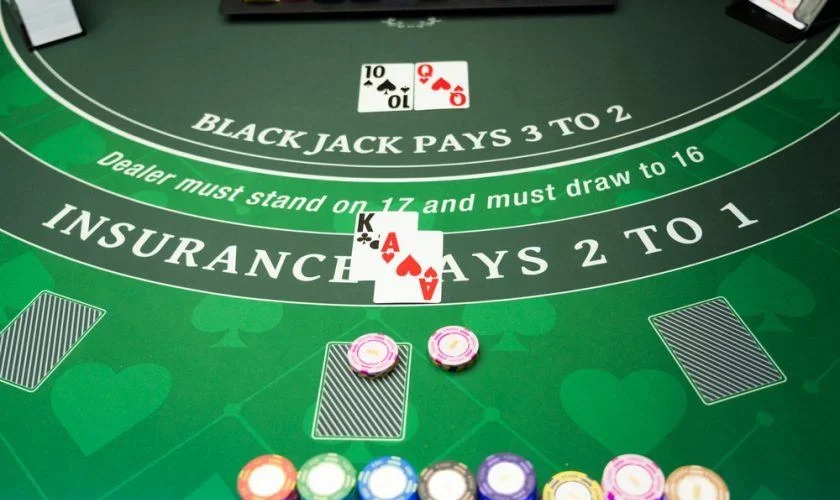
Most casino table games are designed to be passive experiences. You spin a wheel, toss a pair of dice, or pull a lever, and the software or gravity handles the rest. Blackjack differs entirely because it forces you to make consecutive, real-time choices under conditions of uncertainty. Every card dealt across the green felt asks a direct question, and your bankroll lives or dies by how consistently you answer.
The primary obstacle for most recreational players is not a lack of general knowledge, but an absence of structured habits. Players often understand the basics in theory, yet abandon them the moment a bad run begins, a high-stakes moment arrives, or a subtle variation trips up their confidence. Transforming blackjack from a game of erratic guesses into a measured, low-house-edge pursuit requires building reliable habits that dictate every action from the moment you scan the room to the final hand of the night.

The Pre-Hand Routine: Inspecting the Environment

Smart play begins long before you slide cash across the layout for chips. Too many players treat all blackjack tables as identical, sitting at the first open seat they find. In modern casinos, subtle rule adjustments significantly skew the house edge in ways that can render even mathematically sound play unprofitable.
Developing a consistent pre-session habit means auditing the table rules before taking a seat. Your checklist should focus on three essential criteria:
  • The Natural Payout: Confirm that the table pays 3 to 2 on a natural blackjack. Avoid tables that pay 6 to 5, which roughly quadruples the baseline house edge and strips away the financial reward of hitting your best possible hand.
  • Dealer Action on Soft 17: Check whether the dealer hits or stands on soft seventeen. Tables where the dealer must stand on all seventeens shave a modest percentage off the house advantage compared to tables where the dealer draws.
  • Shoe and Surrender Options: Determine whether late surrender is permitted, and take note of the deck shoe size. Having the option to surrender half your wager on severe disadvantages provides a critical defensive lever that disciplined players routinely use.
By making this visual scan automatic, you ensure that your strategic decisions occur in an environment that does not silently undermine your efforts.

The Cognitive Sequence: Prioritizing the Dealer’s Upcard

When amateur players receive their starting cards, their attention almost always fixates entirely on their own point total. They hold a twelve or a fifteen, immediately register discomfort, and wonder whether taking a hit will push them over twenty-one.
Seasoned players train themselves to follow a reverse cognitive sequence. Your eyes should register the dealer’s face-up card before you even process your own total.
Blackjack is fundamentally an asymmetric contest. You act first and risk busting immediately, but the dealer is bound by rigid, mechanical rules that eliminate personal discretion. Because the dealer must draw until reaching at least seventeen, an exposed four, five, or six places the house in a statistically vulnerable posture.
When you build the habit of assessing the dealer’s exposed card first, your own holdings take on context:
  • Against a dealer’s weak upcard (four through six), a stiff total like twelve, thirteen, or fourteen is not a broken hand; it is a completed holding. The objective shifts from improving your total to allowing the dealer the opportunity to bust.
  • Against a dealer’s strong upcard (seven through Ace), you must assume the dealer holds or will draw to a solid total. Standing on sixteen out of fear of busting is a costly defensive mistake. While taking a hit frequently leads to a bust, it remains mathematically superior to standing and quietly surrendering the hand to an inevitable seventeen or higher.
Removing hesitation from these choices requires treating basic strategy not as a set of loose guidelines, but as non-negotiable reflexes.

Executing High-Leverage Plays Without Hesitation

Flat-betting your way through an entire session while hitting and standing conservatively produces a slow, steady drain on your chip stack. The rare windows where a player actually claws back expected value occur during opportunities to double down and split pairs.
Beginners often treat these moments with anxiety because doubling or splitting requires committing additional capital to an unproven outcome. Smarter play relies on turning these offensive maneuvers into automatic routines.

Treating Soft Totals as Offensive Weapons

Hands containing an Ace counted as eleven offer a built-in safety net: you cannot bust on a single-card draw. Yet many players treat hands like Ace-three or Ace-six passively, simply hitting them until they turn into a rigid hard number.
A disciplined habit requires recognizing soft totals as prime doubling candidates against vulnerable dealer upcards. Doubling an Ace-four or Ace-five against a dealer’s four, five, or six maximizes your investment precisely when the dealer’s bust probability is at its peak. Building this habit ensures you do not waste advantageous board textures.

Committing to Strict Pair Protocols

Pair splitting demands identical mechanical consistency. A reliable mental framework simplifies the board:
  • Always split Aces and eights. Two single Aces represent two independent opportunities to land twenty-one, while splitting eights dismantles a sixteen—the most difficult starting hand on the layout.
  • Never split tens or face cards. A standing twenty is already a commanding hand that wins the vast majority of rounds. Sacrificing a guaranteed twenty to chase two speculative hands is an unnecessary gamble.
  • Never split fives. A pair of fives totals ten, which serves as a powerful foundation for a direct double down against weak dealer upcards.
When these responses become second nature, the temptation to improvise evaporates.

Filtering Out Expensive Distractions

Casinos surround blackjack tables with proposition wagers, colorful side bets, and rapid payouts to entice players away from standard strategy. Whether it is a side bet on matching suits, a progressive jackpot wager, or the persistent offer of insurance when the dealer shows an Ace, these options exist solely because they carry significantly higher house edges.
Building smarter habits means establishing a strict policy of zero engagement with peripheral bets:
  • Ignore the insurance offer completely. Insurance is simply a side wager that the dealer’s hole card is worth ten. Unless you are tracking deck composition through advanced card counting, the payout does not match the actual probability, making it a negative-expectation bet over time.
  • Disregard table superstition. A frequent mental trap is allowing other players’ unorthodox plays to disrupt your concentration. If the player at third base hits an unconventional card and draws what would have been the dealer’s bust card, accept that random shuffling means their choice was just as likely to help the table as hurt it. Your decisions must remain entirely insulated from the actions of your neighbors.

Bankroll Architecture and Session Discipline

Strategic mechanics mean very little if your wagering structure is chaotic. Successful blackjack habits extend beyond card play to how you structure your funds and manage the natural fluctuations of probability.
Before sitting down, divide your total session bankroll into distinct betting units. If you plan to wager fifteen dollars per hand, a durable bankroll requires enough units to absorb the standard swings of variance—typically forty to fifty base units. Wagering a disproportionate fraction of your total funds on a single hand guarantees that a standard cold streak will wipe out your stack before probability has time to normalize.
Equally critical is decoupling your bet sizes from recent results. Many players double their bets after losses to recover ground quickly, or escalate stakes wildly during winning streaks under the illusion of momentum. The cards carry no memory of previous hands. Every deal begins with independent statistical realities, and altering your unit size based on emotional momentum invites catastrophic drawdowns.
Decide on predetermined exit parameters based on time duration and unit limits rather than emotional states. Walking away when your allotted session time concludes—regardless of whether you are slightly ahead or experiencing normal variance—cements the discipline required to treat the game with lasting clarity.
read more
Blackjack

How Experienced Players Approach Blackjack Differently From Beginners

Walk up to any bustling blackjack pit in Las Vegas or Atlantic City, and you can usually identify the novice players within two rounds. They lean forward intently, nervously count the pips on their cards, consult their friends on whether sixteen is “too risky,” and breathe an audible sigh of relief whenever their total lands on eighteen or nineteen.
A few spots down, an experienced player operates with an entirely different rhythm. Their gestures are calm and decisive, their bets adjust with quiet purpose, and they seem almost unbothered when dealt an uncomfortable hand.
Blackjack carries a unique reputation as a casino table game where player agency actually matters. Yet the divide between someone casually passing time and someone who treats the felt with strategic respect is vast. The distinction rarely comes down to secret card tricks or superhuman memorization. Instead, it stems from how players frame the objective, process mathematical realities, and manage their emotions when variance swings against them.

Redefining the Objective: Beating the Dealer, Not Chasing Twenty-One

The most pervasive misconception among recreational players is that the goal of blackjack is to get as close to twenty-one as possible. Beginners treat the game like a race toward a target score, continually pulling cards in an effort to construct an impressive hand.
Seasoned players understand that the target score is secondary. The true objective is singular: beat the dealer’s final hand or let the dealer bust.
Because dealers are bound by rigid house rules—they must hit until reaching at least seventeen, without the liberty to exercise personal judgment—the table dynamic is inherently asymmetric. An experienced player treats a hand of twelve or thirteen not as a broken combination, but as a finished holding if the dealer is currently sitting on an exposed five or six. While an amateur sees an ugly twelve and worries about having too few points, a veteran recognizes that the dealer has an elevated probability of exceeding twenty-one. Standing on twelve feels counterintuitive to someone chasing twenty-one, but it is standard procedure for anyone tracking conditional outcomes.

Looking Across the Felt: The Primacy of the Upcard

Beginner decision-making is largely self-centered. A novice evaluates their own two cards in a vacuum, deciding whether to hit or stand based entirely on personal comfort levels. If they hold sixteen, they dread busting and frequently freeze, regardless of what the dealer shows.
Experienced players invert this focus. Before glancing at their own cards, their eyes go directly to the dealer’s visible upcard. In modern blackjack strategy, your cards only gain meaning in relation to that single exposed value.
A hand of sixteen against a dealer’s seven, eight, or nine is mathematically unfavorable, but hitting remains the mathematically superior play because the dealer is heavily favored to finish with a seventeen or higher. Standing guarantees a loss far more often than hitting does, even though taking a hit frequently busts the player. Veterans accept that some decisions are not about engineering a win; they are about loss minimization. Playing the percentages means choosing the least harmful option over a long horizon, a nuance that novices often resist because busting feels worse emotionally than quietly losing to a dealer’s eighteen.

Calculated Aggression: Doubling Down and Splitting Pairs

Recreational players often treat doubling down and splitting pairs with extreme hesitation. Handing the dealer another stack of chips feels like unnecessary exposure, especially if the initial cards look mediocre. Beginners frequently double only on obvious hands like an eleven, and they often split only high pairs like tens or face cards.
Experienced players approach these opportunities from the opposite direction. They recognize that basic flat-betting against the house edge is a slow drain, and that the moments of true player advantage come precisely from aggressive doubling and splitting.
For instance, veteran players routinely double down on soft totals—hands containing an Ace counted as eleven, such as an Ace-three or Ace-six—when the dealer exposes a weak upcard like a four, five, or six. Beginners often view soft totals as fragile, but experienced players see them as a free offensive swing where they cannot immediately bust on one additional card while the dealer is in trouble.
Crucially, experienced players maintain strict discipline with pair splitting:
  • They never split tens, knowing that a pat twenty is already one of the strongest defensive positions at the table.
  • They always split Aces and eights, treating two single Aces as separate offensive opportunities and breaking up a sixteen (two eights) to escape the worst starting total in the game.
  • They never split fives, choosing instead to double down on a starting ten against weak dealer cards.

The Mirage of Insurance and Side Bets

Casinos love proposition wagers and decorative side bets because they inject high house margins into otherwise low-edge games. When a dealer reveals an Ace, beginners frequently bite on the offer for insurance, especially if the player is holding a natural blackjack and the dealer offers “even money.”
To an inexperienced player, taking even money feels like guaranteed safety—a quick, painless way to lock in a profit without risking a push.
To an experienced player, standard insurance is considered a sucker bet. Mathematically, insurance is simply a secondary side wager that the dealer’s facedown card has a value of ten. In a standard multi-deck shoe, the odds against that hole card being a ten do not justify the two-to-one payout. Taking even money reduces the long-term payout of hitting a natural blackjack from the standard rate down to a flat one-to-one return. Unless an advantage player is actively counting cards and knows the shoe is rich in tens, insurance is bypassed without a second thought.
The same discipline applies to table side bets like three-card combinations or pair jackpots. While novices view these as exciting micro-lotteries that add flavor to the hand, veterans know these wagers carry house edges that often exceed ten percent, eroding any strategic edge built on the primary layout.

Scrutinizing Table Rules Before Sitting Down

A novice walks into a casino and sits at whatever empty stool has an agreeable minimum bet. An experienced player scans the felt like an inspector checking building codes.
Not all blackjack games are created equal. Minor rule variations dramatically alter the mathematical landscape:
  • The 6:5 Payout Trap: Traditional blackjack pays 3:2 on a natural, meaning a ten-dollar bet yields fifteen dollars. In recent years, casinos have widely introduced tables paying 6:5, yielding only twelve dollars for the same result. This single change balloons the baseline house advantage dramatically. Experienced players simply refuse to sit at a 6:5 table.
  • Dealer Action on Soft Seventeen: A table where the dealer stands on all seventeens is significantly more player-friendly than one where the dealer hits soft seventeen (an Ace and a six).
  • Surrender Options: Late surrender allows players to forfeit half their bet on terrible starting positions against strong dealer upcards. While beginners rarely use it because giving up feels like defeat, veterans use surrender systematically to preserve bankroll equity.

Emotional Discipline and the Myth of Table Karma

Perhaps the starkest divergence between beginners and seasoned players is psychological. Beginners routinely get frustrated by other players’ decisions. If someone sitting at third base—the seat immediately to the dealer’s right—hits a twelve against a six, busts, and draws a ten that would have busted the dealer, novices erupt. They blame their table mates for “ruining the shoe” or “taking the dealer’s bust card.”
Experienced players realize that table position and the erratic decisions of other players have zero mathematical bearing on their own long-term odds. The next card out of the shoe is completely unknown; an irregular hit by a novice is just as likely to save the table on the following hand as it is to hurt it.
Beyond etiquette myths, experienced players detach their emotions from short-term variance. They calculate their bankroll in betting units rather than rent money, expect long losing streaks as an inevitable feature of probability, and stick rigidly to optimal strategy rather than chasing losses with erratic wagers.
Where beginners see a game of instincts, hunches, and good luck charms, experienced players see an ongoing exercise in risk mitigation and statistical execution. The cards will fall where they may, but the decisions at the felt remain under complete control.
read more
Online Betting

Ultimate Cricbet99 Tutorial for First-Time Bettors

Cricbet99 can seem overwhelming for complete beginners with no prior betting experience, but breaking down the entire process into manageable steps demystifies cricket betting and establishes proper foundations. This ultimate tutorial walks you through every aspect from basic terminology through your first successful bet to building sustainable long-term betting habits.

Cricket Betting Fundamentals

Before engaging with any betting platform, understand core concepts:

Odds: Numerical representation of outcome probability and potential returns. Higher odds = less likely outcome but bigger payout. Lower odds = more likely outcome but smaller payout.

Stake: The amount of money you’re risking on a bet. If you bet Rs. 100, that’s your stake.

Return: Total amount received if bet wins, including both profit and returned stake.

Bankroll: Your total allocated betting budget—money set aside specifically for betting that doesn’t affect essential expenses.

Understanding Different Bet Types

Match Winner (Moneyline): Simplest bet—which team wins the match. Only two outcomes in most cricket (three if draws are possible in Test cricket).

Over/Under (Totals): Betting on whether total runs scored exceed or fall below a specified number. “Over 165.5 runs” wins if total reaches 166+.

Player Props: Bets on individual player performance—top batsman, player to score 50+ runs, bowler to take 2+ wickets.

Accumulators/Parlays: Combining multiple bets where all selections must win for payout. Higher risk but dramatically higher potential returns.

Cric99 offers dozens of market types, but start with match-winner and over/under to build fundamental understanding before exploring complex options.

Creating Your First Betting Budget

Determine how much money you’re comfortable potentially losing on entertainment. This should be true discretionary income—after rent, food, savings, bills, and emergency funds.

For absolute beginners, start with Rs. 500-1000 total budget. This provides 10-20 small bets for learning without risking meaningful money. Once competent, scale up gradually.

Never bet:

  • Money needed for rent or bills
  • Borrowed money or credit cards
  • Money you’d regret losing
  • Amounts causing stress or anxiety

Navigating the Cricbet99 Interface

Familiarize yourself with key sections:

Home/Featured: Displays popular upcoming matches and major betting markets.

Sports Menu: Lists all available sports (focus on Cricket initially).

Live Betting: Shows currently playing matches with real-time odds updates.

Bet Slip: Right-side panel (or bottom on mobile) where selected bets appear before confirmation.

My Account: Deposits, withdrawals, betting history, and account settings.

Spend 15-20 minutes exploring without betting—understand where things are located to prevent errors during actual wagering.

Placing Your Very First Bet

Step 1: Find an upcoming cricket match you understand—perhaps an IPL game featuring teams you follow.

Step 2: Click the match to view available markets.

Step 3: Select the simplest market: Match Winner.

Step 4: Research both teams briefly—recent form, player availability, head-to-head record.

Step 5: Click odds for the team you think will win. The bet appears in your bet slip.

Step 6: Enter a small stake—Rs. 50 for your very first bet.

Step 7: Review the bet slip showing potential return.

Step 8: Confirm the bet.

Congratulations—you’ve placed your first cricket bet! Now watch the match and see how it unfolds.

Understanding Bet Settlement

After the match concludes, your bet settles:

  • Won: Profit plus original stake credited to account
  • Lost: Stake was already deducted when placing bet
  • Void: Rare circumstances void bets, returning stakes

Check “My Bets” or “Betting History” to see settlement details and final profit/loss.

Learning from Early Experiences

Your first 10-20 bets are learning opportunities regardless of outcomes. Keep a simple journal:

  • What bet did I place?
  • Why did I think it would win?
  • What actually happened?
  • What did I learn?

This reflection builds analytical skills faster than just placing bets without contemplation.

Common Beginner Mistakes to Avoid

Betting too much too soon: Start small. You’re paying for education through early bets.

Chasing losses: After losing Rs. 200, don’t immediately bet Rs. 500 trying to recover. This spiral destroys bankrolls.

Betting on unfamiliar matches: Only bet on cricket you understand—teams, formats, conditions you’ve researched.

Ignoring odds value: Don’t just bet favorites. Sometimes underdogs at good odds offer better value.

Emotional betting: Betting on your favorite team regardless of logic leads to poor decisions.

Building Sustainable Habits

Research before betting: Spend 10-15 minutes analyzing each match before wagering.

Set weekly limits: Decide maximum weekly betting amount and stick to it regardless of results.

Take breaks: Don’t bet every single match. Selective betting based on genuine edge works better.

Track everything: Record all bets, reasoning, and outcomes. This data becomes invaluable for improvement.

Learn continuously: Read cricket analysis, watch matches, study statistics. Expertise develops over months, not days.

Frequently Asked Questions

Q: How much money can I make from cricket betting as a beginner? Realistically, most beginners lose money initially while learning. Focus on education and entertainment, not profit expectations, for first 3-6 months.

Q: Should I use betting bonuses as a beginner? Be cautious—bonuses have rollover requirements that can force unprofitable betting. Start without bonuses to learn fundamentals first.

Q: How long does it take to become a profitable cricket bettor? Most successful bettors require 6-12 months of dedicated learning before consistent profitability emerges. Many never achieve it—treat as entertainment, not income.

Q: Can I bet cricket successfully without watching matches? Very difficult—watching provides crucial context that statistics alone miss. Match observation is essential for developing betting skills.

Q: What’s the single most important thing for betting success? Discipline—managing your bankroll, avoiding emotional decisions, and betting only when you have genuine edges rather than chasing action constantly.

Conclusion

Cricbet99 cricket betting for first-timers requires understanding fundamentals, starting with small budgets, mastering the platform interface, placing conservative initial bets, and building analytical habits through careful record-keeping. Prioritize learning over immediate profits, avoid common beginner traps like chasing losses, and develop disciplined approaches that sustain engagement long-term. Treat early betting as entertainment and education, with any profits being pleasant bonuses rather than expected outcomes.

read more
Online Betting

ReddyBook Club: Unlocking Hidden Betting Opportunities

You know that feeling when you’re watching an IPL match and suddenly spot something everyone else seems to miss? Maybe it’s how a particular bowler always struggles in the 18th over, or how a certain batsman crushes spin bowling at Chepauk but nowhere else. That’s the kind of edge serious bettors live for, and it’s exactly what Reddybook Club membership is designed to amplify.

Think of premium membership as having a backstage pass to a concert while everyone else watches from the nosebleeds. Sure, they’re at the same show, but your experience? Completely different universe.

What Actually Changes When You Go Premium

Let’s cut through the marketing fluff and talk about what really matters. When you upgrade to club membership, you’re not just getting a fancy badge next to your username. You’re gaining access to markets that regular users literally cannot see. We’re talking about betting opportunities that go live 24 hours before the general public even knows they exist.

Imagine this scenario: It’s Tuesday afternoon, and whispers are circulating that Bumrah might be rested for Thursday’s match. Club members get specialized markets allowing them to position bets before Wednesday morning when the official announcement drops and odds crater. By the time regular bettors wake up to the news, the value’s already gone.

The Economics of Better Odds

Here’s something most bettors never calculate properly: odds differences that seem tiny actually compound into massive value over time. If you’re getting 1.95 on a bet where regular users see 1.88, that doesn’t sound like much. Just 0.07 difference, right?

Wrong. Over a hundred bets with ₹1,000 stakes, that’s the difference between returning ₹195,000 versus ₹188,000. Seven thousand rupees just… vanished because you didn’t have access to better pricing. Now multiply that across an entire IPL season with 70+ matches, and you’re looking at real money.

Club members consistently report odds improvements of 3-8% across various markets. That’s not luck. That’s structural advantage.

The Intelligence Network You Didn’t Know You Needed

Remember when you spent three hours researching team news, scouring Twitter, checking injury reports, and analyzing pitch conditions? What if someone else did that professionally and just handed you a detailed brief every morning?

That’s essentially what premium analytical content provides. Former international cricketers, professional analysts, and statistics experts compile reports that would take you half a day to assemble yourself. They’re watching practice sessions, tracking player workload, monitoring weather patterns at specific venues, and synthesizing everything into actionable insights.

One club member told us he used to spend 90 minutes before each match doing research. With premium analysis, he spends 15 minutes reviewing expert reports and uses the saved time actually watching cricket or, you know, living his life.

Markets That Don’t Exist For Everyone Else

Standard users see maybe 30-40 markets per IPL match. Club members? Try 70-100. These aren’t just variations of the same bets either. We’re talking completely unique propositions.

Want to bet on whether a specific batsman will hit more sixes off pace versus spin? That market exists for premium members. Curious whether the powerplay will see more boundaries through the offside or legside? There’s a market for that too. These specialized options let you leverage deep cricket knowledge that would otherwise go unused.

The best part? Because these markets are less liquid and less visible, bookmakers haven’t optimized them as aggressively. Translation: more value hiding in plain sight for those who can access them.

Personal Account Managers Who Actually Know Cricket

Customer support for regular users means talking to someone reading from a script about “technical issues” and “escalating your concern.” Your personal account manager? That’s a different species entirely.

These aren’t generic support reps. They’re experienced professionals who understand betting markets, follow IPL religiously, and genuinely want you to succeed because your success reflects well on them. Call with a question about how dew affects evening matches at specific venues, and they’ll have informed opinions, not robotic responses.

More importantly, they proactively reach out. Notice you consistently profit from death-over session betting? Your manager might alert you to enhanced odds on similar markets you hadn’t noticed. They become partners in your betting strategy, not obstacles between you and your money.

The Hidden Value of Priority Everything

Speed matters in betting. When odds are moving rapidly during a live match and you need to place a bet RIGHT NOW, the difference between instant execution and a 10-second delay determines whether you get value odds or miss the window entirely.

Club members jump every queue. Withdrawals that take regular users 3-5 business days? Premium members see funds in 4-24 hours. Deposit issues during crucial betting windows? Priority support resolves them while others wait. Bet settlement disputes? Your issue gets escalated immediately to senior staff with actual decision-making authority.

This isn’t just convenience—it’s operational advantage that directly impacts profitability.

Exclusive Tournaments and Competitions

Beyond standard betting, club membership unlocks access to members-only prediction contests, leaderboard challenges, and special tournaments with prize pools that can easily exceed ₹500,000. These create additional profit pathways completely separate from regular betting.

Some competitions require no entry fee, meaning you’re competing for real money prizes with zero downside risk. Others have small entry fees but limited fields, dramatically improving your odds of finishing in the money compared to public contests with thousands of participants.

Network Effects and Community Intelligence

Perhaps the most underrated benefit is the community itself. The club forum connects you with other serious, experienced bettors—people who’ve been profitably betting on cricket for years, not casual fans dropping ₹500 on their favorite team.

Conversations in these spaces operate at a different level. Someone notices that a particular umpire consistently gives close LBW calls against left-handers. Another member has tracked how specific captains rotate bowlers differently in must-win matches. You contribute your own observations about opening partnerships at certain venues.

Collectively, the wisdom becomes greater than any individual could develop alone. And because everyone has skin in the game (club membership costs money), the quality of insights far exceeds free public forums filled with casual opinions.

The Actual Math on Whether It’s Worth It

Let’s be direct about costs. Club membership typically runs ₹2,000-₹5,000 monthly depending on tier, or ₹20,000-₹50,000 annually with discounts for long-term commitments.

Is that worth it? Depends entirely on your betting volume. If you’re wagering ₹5,000 monthly, probably not. The improved odds and features won’t generate enough extra value to offset membership costs.

But if you’re betting ₹50,000-₹100,000+ monthly? The math becomes compelling. Even a 2% improvement in effective odds on ₹100,000 monthly action yields ₹2,000 extra value—essentially paying for basic membership before considering all the other benefits.

High-volume bettors moving ₹500,000+ monthly often find premium membership among their highest-ROI investments, easily generating 10-20X returns on the membership fee through better odds, exclusive markets, and insider intelligence.

Making the Upgrade Decision

Here’s the honest assessment: If you’re a casual fan who bets ₹1,000-₹2,000 weekly on a few matches, stick with standard access. The premium features won’t align with your usage pattern.

But if you’re serious about IPL betting—researching matches, tracking statistics, developing strategies, and wagering meaningful amounts—club membership transitions from luxury to necessity. The edges it provides compound dramatically for engaged users who leverage every benefit.

Think of it this way: you’re already investing time and money into betting. Premium membership multiplies the return on both investments. It’s not about spending more; it’s about extracting more value from what you’re already doing.

reddy book id provides complete transparency on membership benefits with detailed ROI calculators showing exactly how much value you’d need to extract to justify the cost based on your specific betting patterns.

FAQ

Q: Can I try club membership before committing long-term? Most platforms offer 30-day trial memberships at reduced rates. Some even provide 7-day free trials. Test-drive the features with real betting before making annual commitments.

Q: Do club benefits work for all sports or just cricket? Benefits typically apply platform-wide across all sports, though some cricket-specific perks (like IPL analysis reports) obviously focus on cricket exclusively.

Q: Will I get restricted or limited faster as a winning club member? Reputable platforms maintain club benefits even for winning members, though they may adjust limits on specific markets. Your VIP status doesn’t disappear due to success.

Q: Can membership be refunded if I’m not satisfied? Policies vary, but many platforms offer 7-14 day satisfaction guarantees. Read refund terms carefully before purchasing.

read more
1 2 3 … 20
Page 1 of 20