Most casino table games are designed to be passive experiences. You spin a wheel, toss a pair of dice, or pull a lever, and the software or gravity handles the rest. Blackjack differs entirely because it forces you to make consecutive, real-time choices under conditions of uncertainty. Every card dealt across the green felt asks a direct question, and your bankroll lives or dies by how consistently you answer.
The primary obstacle for most recreational players is not a lack of general knowledge, but an absence of structured habits. Players often understand the basics in theory, yet abandon them the moment a bad run begins, a high-stakes moment arrives, or a subtle variation trips up their confidence. Transforming blackjack from a game of erratic guesses into a measured, low-house-edge pursuit requires building reliable habits that dictate every action from the moment you scan the room to the final hand of the night.
The Pre-Hand Routine: Inspecting the Environment
Smart play begins long before you slide cash across the layout for chips. Too many players treat all blackjack tables as identical, sitting at the first open seat they find. In modern casinos, subtle rule adjustments significantly skew the house edge in ways that can render even mathematically sound play unprofitable.
Developing a consistent pre-session habit means auditing the table rules before taking a seat. Your checklist should focus on three essential criteria:
-
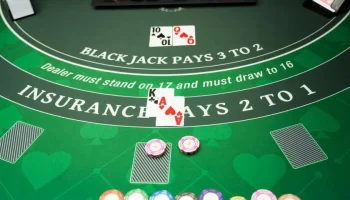
The Natural Payout: Confirm that the table pays 3 to 2 on a natural blackjack. Avoid tables that pay 6 to 5, which roughly quadruples the baseline house edge and strips away the financial reward of hitting your best possible hand.
-
Dealer Action on Soft 17: Check whether the dealer hits or stands on soft seventeen. Tables where the dealer must stand on all seventeens shave a modest percentage off the house advantage compared to tables where the dealer draws.
-
Shoe and Surrender Options: Determine whether late surrender is permitted, and take note of the deck shoe size. Having the option to surrender half your wager on severe disadvantages provides a critical defensive lever that disciplined players routinely use.
By making this visual scan automatic, you ensure that your strategic decisions occur in an environment that does not silently undermine your efforts.
The Cognitive Sequence: Prioritizing the Dealer’s Upcard
When amateur players receive their starting cards, their attention almost always fixates entirely on their own point total. They hold a twelve or a fifteen, immediately register discomfort, and wonder whether taking a hit will push them over twenty-one.
Seasoned players train themselves to follow a reverse cognitive sequence. Your eyes should register the dealer’s face-up card before you even process your own total.
Blackjack is fundamentally an asymmetric contest. You act first and risk busting immediately, but the dealer is bound by rigid, mechanical rules that eliminate personal discretion. Because the dealer must draw until reaching at least seventeen, an exposed four, five, or six places the house in a statistically vulnerable posture.
When you build the habit of assessing the dealer’s exposed card first, your own holdings take on context:
-
Against a dealer’s weak upcard (four through six), a stiff total like twelve, thirteen, or fourteen is not a broken hand; it is a completed holding. The objective shifts from improving your total to allowing the dealer the opportunity to bust.
-
Against a dealer’s strong upcard (seven through Ace), you must assume the dealer holds or will draw to a solid total. Standing on sixteen out of fear of busting is a costly defensive mistake. While taking a hit frequently leads to a bust, it remains mathematically superior to standing and quietly surrendering the hand to an inevitable seventeen or higher.
Removing hesitation from these choices requires treating basic strategy not as a set of loose guidelines, but as non-negotiable reflexes.
Executing High-Leverage Plays Without Hesitation
Flat-betting your way through an entire session while hitting and standing conservatively produces a slow, steady drain on your chip stack. The rare windows where a player actually claws back expected value occur during opportunities to double down and split pairs.
Beginners often treat these moments with anxiety because doubling or splitting requires committing additional capital to an unproven outcome. Smarter play relies on turning these offensive maneuvers into automatic routines.
Treating Soft Totals as Offensive Weapons
Hands containing an Ace counted as eleven offer a built-in safety net: you cannot bust on a single-card draw. Yet many players treat hands like Ace-three or Ace-six passively, simply hitting them until they turn into a rigid hard number.
A disciplined habit requires recognizing soft totals as prime doubling candidates against vulnerable dealer upcards. Doubling an Ace-four or Ace-five against a dealer’s four, five, or six maximizes your investment precisely when the dealer’s bust probability is at its peak. Building this habit ensures you do not waste advantageous board textures.
Committing to Strict Pair Protocols
Pair splitting demands identical mechanical consistency. A reliable mental framework simplifies the board:
-
Always split Aces and eights. Two single Aces represent two independent opportunities to land twenty-one, while splitting eights dismantles a sixteen—the most difficult starting hand on the layout.
-
Never split tens or face cards. A standing twenty is already a commanding hand that wins the vast majority of rounds. Sacrificing a guaranteed twenty to chase two speculative hands is an unnecessary gamble.
-
Never split fives. A pair of fives totals ten, which serves as a powerful foundation for a direct double down against weak dealer upcards.
When these responses become second nature, the temptation to improvise evaporates.
Filtering Out Expensive Distractions
Casinos surround blackjack tables with proposition wagers, colorful side bets, and rapid payouts to entice players away from standard strategy. Whether it is a side bet on matching suits, a progressive jackpot wager, or the persistent offer of insurance when the dealer shows an Ace, these options exist solely because they carry significantly higher house edges.
Building smarter habits means establishing a strict policy of zero engagement with peripheral bets:
-
Ignore the insurance offer completely. Insurance is simply a side wager that the dealer’s hole card is worth ten. Unless you are tracking deck composition through advanced card counting, the payout does not match the actual probability, making it a negative-expectation bet over time.
-
Disregard table superstition. A frequent mental trap is allowing other players’ unorthodox plays to disrupt your concentration. If the player at third base hits an unconventional card and draws what would have been the dealer’s bust card, accept that random shuffling means their choice was just as likely to help the table as hurt it. Your decisions must remain entirely insulated from the actions of your neighbors.
Bankroll Architecture and Session Discipline
Strategic mechanics mean very little if your wagering structure is chaotic. Successful blackjack habits extend beyond card play to how you structure your funds and manage the natural fluctuations of probability.
Before sitting down, divide your total session bankroll into distinct betting units. If you plan to wager fifteen dollars per hand, a durable bankroll requires enough units to absorb the standard swings of variance—typically forty to fifty base units. Wagering a disproportionate fraction of your total funds on a single hand guarantees that a standard cold streak will wipe out your stack before probability has time to normalize.
Equally critical is decoupling your bet sizes from recent results. Many players double their bets after losses to recover ground quickly, or escalate stakes wildly during winning streaks under the illusion of momentum. The cards carry no memory of previous hands. Every deal begins with independent statistical realities, and altering your unit size based on emotional momentum invites catastrophic drawdowns.
Decide on predetermined exit parameters based on time duration and unit limits rather than emotional states. Walking away when your allotted session time concludes—regardless of whether you are slightly ahead or experiencing normal variance—cements the discipline required to treat the game with lasting clarity.